OEM / ODM MANUFACTURING·SILICONE & PLASTIC·SMALL-BATCH CUSTOMIZATION·US MARKET PROJECTS

BAOYUANFENG / CUSTOMIZATION

What You Can Actually Change

Customization is not one decision. Colour, surface, logo method, lid, components and packing each carry their own minimum, cost and risk — and one of them usually decides whether the project is viable at your quantity.

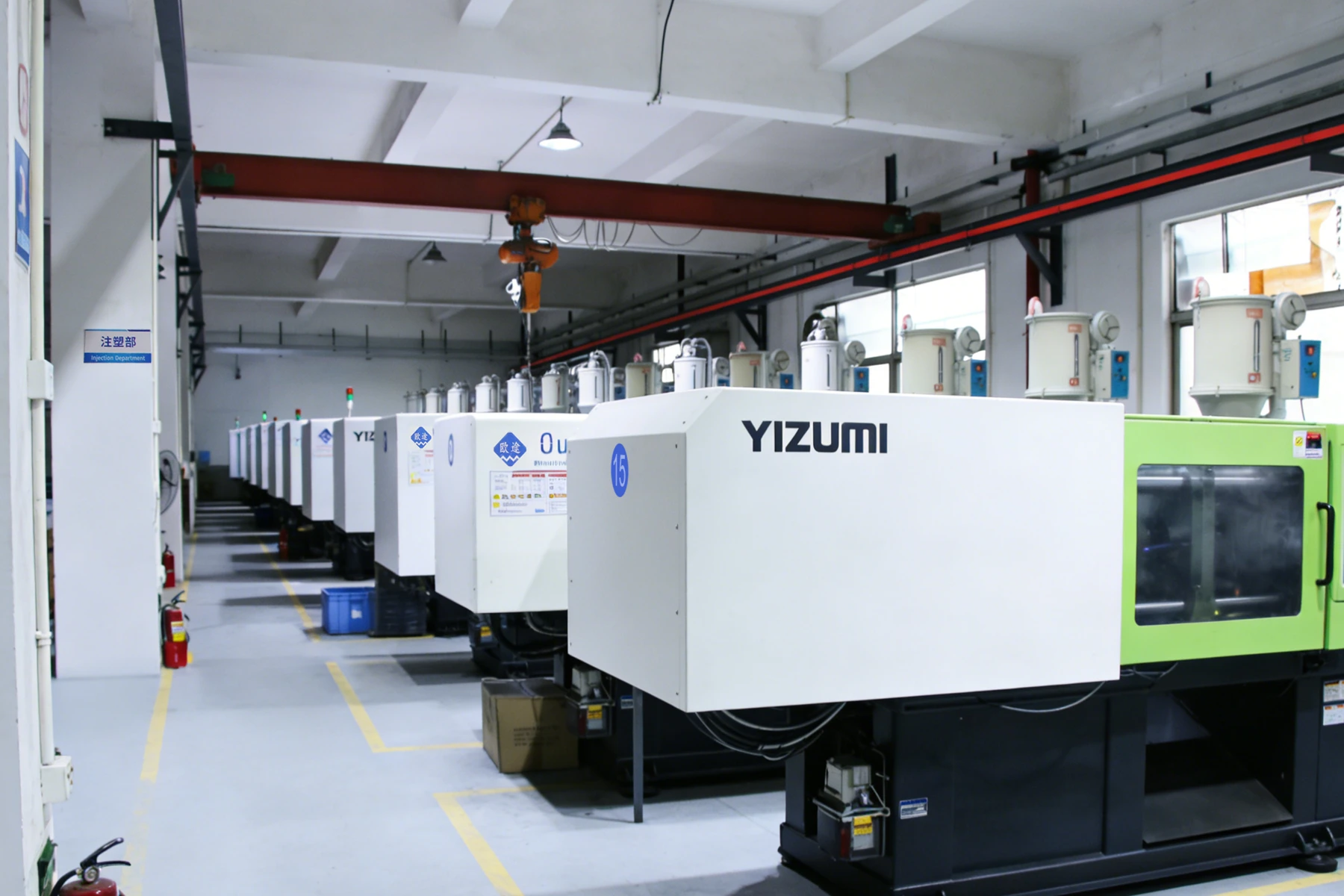
Injection moulding equipment in the factory workshop
Decoration is planned before moulding — the surface a part needs depends on what happens to it next.
Entry minimum
10pcs
Existing model + print
Custom colour
10pcs
Colour match charged as setup
New mould
3,000pcs
Tooling on the buyer
Logo methods
5
Print, laser, transfer, dip, decal
Artwork to sample
5–7days
Decorated sample

THE FOUR LAYERS

Four layers of customization, from cheapest to deepest.

Buyers often ask for everything at once. The order below is the order in which cost rises — and the order in which each layer changes what the next one can do.

Colour and surface

Match a Pantone on the body, or choose from the standard colour chips. Gloss, frosted, matte or soft-touch. A custom colour needs its own batch, so we charge the colour match as a one-off setup instead of making you buy a run you will never use up — and the chip has to be approved under the light it will be seen in.

From 10 pcs, colour match quoted separately

Logo and artwork

Screen print, UV print, heat transfer, laser or hydro dip. One colour of print is a different project from a full wrap: colour count, print area, curvature and the surface under the ink all change the price.

From 10 pcs · one to eight colours

Lid and components

Swap to another lid in the library, add a straw, plug, coaster or sleeve. A component we already tool is a configuration change; a component that does not exist is a new mould.

Existing parts · or 1,000+ for one new part

Packing and presentation

Poly bag, white box, printed sleeve, gift box, insert, hangtag or barcode. Packing is where a promotional cup becomes a retail product, and it carries its own minimums.

See the packaging page
CHOOSING THE METHOD

Five ways to put a logo on a cup.

The right method is decided by the artwork, the surface, the quantity and how long the product has to look good. This is the short version; each method has its own page with the details.

MethodBest forWatch out forDetail
Screen printBold flat colours, high volume, the lowest cost per printPhotographic images and gradients; each colour is a passScreen printing →
UV printMulti-colour artwork, gradients, white underbase on dark cupsAdhesion on some surfaces needs a primer; silicone behaves differently from rigid plasticUV printing →
Heat transferPhotographic graphics and full wrapsHeat response differs by material; registration and transfer edges must be checked on a sampleHeat transfer →
Laser markingPermanent, tonal or textured marks that do not wear offMaterial-dependent result; not every colour shows a contrastLaser decoration →
Hydro dipAll-over patterns and camouflage effects that wrap complex curvesPattern placement is not repeatable piece to piece; film choice decides the lookHydro dipping →
Colour-change coatingA cup that reacts to cold liquid — a giveaway that gets photographedActivation temperature and response time need sample approval; UV exposure shortens lifeColour-change ink →

Every method above is confirmed on a physical sample. A screen proof tells you the file is right; only a decorated sample tells you the cup is right.

WHERE THE MINIMUM MOVES

Why the same cup has three different minimums.

The minimum is not a policy — it is what the setup costs. A print screen, a colour match and a mould are three completely different investments.

What you changeTypical minimumWhy
Existing model, plain or one-colour print10 pcsNo setup beyond the screen; the model already runs
Multi-colour print or a full wrap10 pcsEach colour is a pass, so the screens are charged as setup
Custom body colour10 pcsThe colour match is a one-off setup, not a minimum run
Custom lid or component on an existing body1,000 pcsOne small mould, quoted on its own
New product3,000 pcs1–4 mould sets; tooling charged separately

Where a buyer needs fewer pieces than the minimum, the honest options are: pick a different configuration, accept a higher unit price for a short run, or pay the setup separately. We quote all three when asked.

Can I mix designs in one order to reach the minimum?

Yes on print — several artwork versions can share one production run if the model and colour are the same. They cannot share a tooling investment, so a mixed order does not unlock a lower MOQ on a new mould.

Can you match a Pantone colour exactly?

We match to a chip you approve under an agreed light source. Plastic, ink and coating each render a colour slightly differently, so an exact match across body and print is confirmed on a sample, not on a screen.

Do you print on silicone?

Silicone is a different surface and needs its own validation — pad printing or laser rather than a standard screen pass. Ask before you build artwork around it.

Can artwork be changed after the sample is approved?

Yes, before the press starts. After that, the change is a new run — which is why the approval email is treated as the production reference.

YOUR NEXT STEP

Send the artwork and the model. We will tell you which layer it needs.

Artwork file or a description, the model, the quantity per version and where the product is sold.

Send Artwork for Review ↗