Photos and video before packing
The run, the finished goods and the packed cartons, sent for approval while a correction is still possible. Not a photo of somebody else's order.
BAOYUANFENG / QC · TESTING · ACCEPTANCE
Ten full-time inspectors and a written acceptance standard per order. A cup either matches the signed-off sample or it does not go in the carton — and the checks that decide that are the same on the first order and the tenth.
THREE STAGES
Most defects that reach a buyer were set in the first hour: a colour chip approved under the wrong light, a wall thickness nobody measured, an artwork file nobody read. These are the checkpoints that stop that.
Resin grade and supplier lot checked against the approved specification. Silicone hardness checked against the approved sample. Colour matched to the chip under the same light source used for approval.
The approved sample, artwork version and dimension sheet are pulled and attached to the order. That set is the acceptance reference for every later check — including a repeat order two years later.
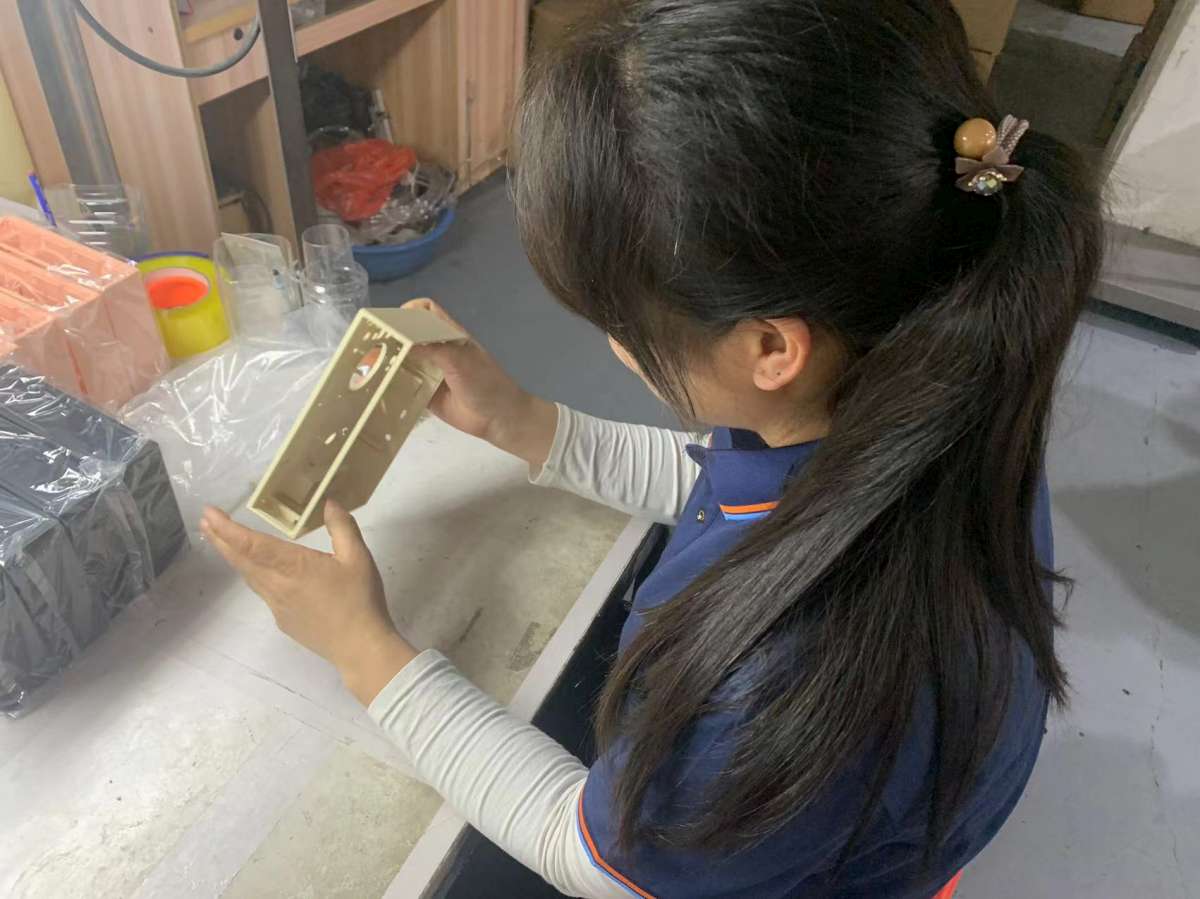
The first parts off the press are measured and kept. Dimensions, capacity, wall thickness and lid fit are compared with the drawing before the run continues.
Inspectors pull units through the shift and check appearance, flash, sink marks, print position and assembly. A drifting parameter is corrected at the machine, not sorted out at the end.
The batch is sampled by size, opened, measured and leak-tested where the order calls for it. Carton weight, drop test and shipping marks are checked on the packed carton.
Packing list, inspection record and the retained sample are filed against the order number, then sent with the photos for your approval before the container is released.
SAMPLING
AQL sampling is a statistical check, not a promise of zero defects. What it does promise is that a defect rate above the agreed level will be caught here rather than in your warehouse.
| Batch size | Units opened | What is checked |
|---|---|---|
| Under 500 pcs | 5% | Appearance, dimensions, assembly |
| 500 – 2,000 pcs | 3% | The above, plus a water leak test on assembled units |
| Over 2,000 pcs | 1% | The above, plus carton drop test and shipping marks |
WHAT WE TEST
Which of these apply depends on the product and the market. All six are available on request, and the ones included in your order are written into the specification.
| Test | What it proves | Applies to |
|---|---|---|
| Leak test | The lid, seal and thread hold water after assembly — the failure buyers notice first | Tumblers, shakers, travel cups |
| Dimensional check | Capacity, height, rim diameter and wall thickness match the approved drawing | Every model |
| Colour and appearance | Body colour, print colour and surface finish match the approved chip and sample under the same light | Every decorated order |
| Print adhesion (tape test) | The print survives handling, washing and packing tape rather than flaking on arrival | Screen print, UV print, heat transfer, decal |
| Assembly and fit | Lid engagement, straw fit, stackability and part interchangeability across the batch | Multi-part items |
| Carton drop and marks | The packed carton survives transit and carries the right shipping marks and labels | Every export shipment |
WHAT YOU RECEIVE
A buyer who cannot see the inspection is trusting a sentence. These are the artifacts that travel with an order.
The run, the finished goods and the packed cartons, sent for approval while a correction is still possible. Not a photo of somebody else's order.
Batch size, units opened, what was checked and what was found — filed against the order number and available with the shipping documents.
The signed-off sample and artwork version are kept, so a repeat order in two years is measured against the same reference instead of someone's memory.
Yes, and we encourage it on a first order. Tell us the agency and the date; we schedule production so the goods are packed and accessible when the inspector arrives. The inspection fee is yours, the access is ours.
The batch is sorted against the agreed standard before shipment, and the re-inspection is at our cost when the failure is ours. If a specification was ambiguous, we fix the specification first — otherwise the same failure returns on the next run.
Yes. One approved sample per version stays with the order record. If you need a duplicate sent to your office, ask at quotation.
Not by default. Reports are issued per model by a third-party lab and charged at cost; they are quoted as a separate line so you can decide whether your market needs one.
WHERE THE RULES ARE PUBLISHED
The AQL levels above follow ISO 2859-1, which is a paid standard you buy from ISO directly — we are not going to pretend otherwise. The material tests sit on rules that are free to read. The six links below go to the issuing body itself: no reseller, no summary blog, no copy on our server. Read the clause before you accept our word for it.
| Rule | What it actually covers | Original text |
|---|---|---|
| FDA — Food Ingredients & Packaging | The US framework: what counts as a food contact substance and how it is cleared before sale | fda.gov ↗ |
| 21 CFR Part 177 | Indirect food additives — the permitted base polymers, including polypropylene and rubber articles | ecfr.gov ↗ |
| EU 1935/2004 | Framework regulation for any material intended to touch food in the EU | eur-lex.europa.eu ↗ |
| EU 10/2011 | The plastic-specific rules: authorised substances, migration limits, declaration of compliance | eur-lex.europa.eu ↗ |
| LFGB (Germany) | German food and feed code — what an LFGB report is issued against, and what it leaves out | gesetze-im-internet.de ↗ |
| California Prop 65 | Warning requirement for listed chemicals; it reaches decorated and printed drinkware sold in California | oehha.ca.gov ↗ |
None of these documents says your cup passed. They say what a laboratory has to test, and against which limit. Which clause applies to your order depends on the material, the market and whether the cup is aimed at children — send the model and the destination and we will name the clause, not just the standard number.
CONTINUE YOUR PROJECT
YOUR NEXT STEP
Tell us the model, the market and the tests your buyer asks for. We will write them into the specification before the first part is moulded.